The Hidden Truth About Flight Delays: What Passengers Don't See
Flight delays are often caused by much more than bad weather. Learn what happens behind the scenes before takeoff, why delays occur, and how flight attendants, pilots, maintenance teams, and air traffic control work together to keep every flight as safe as possible.

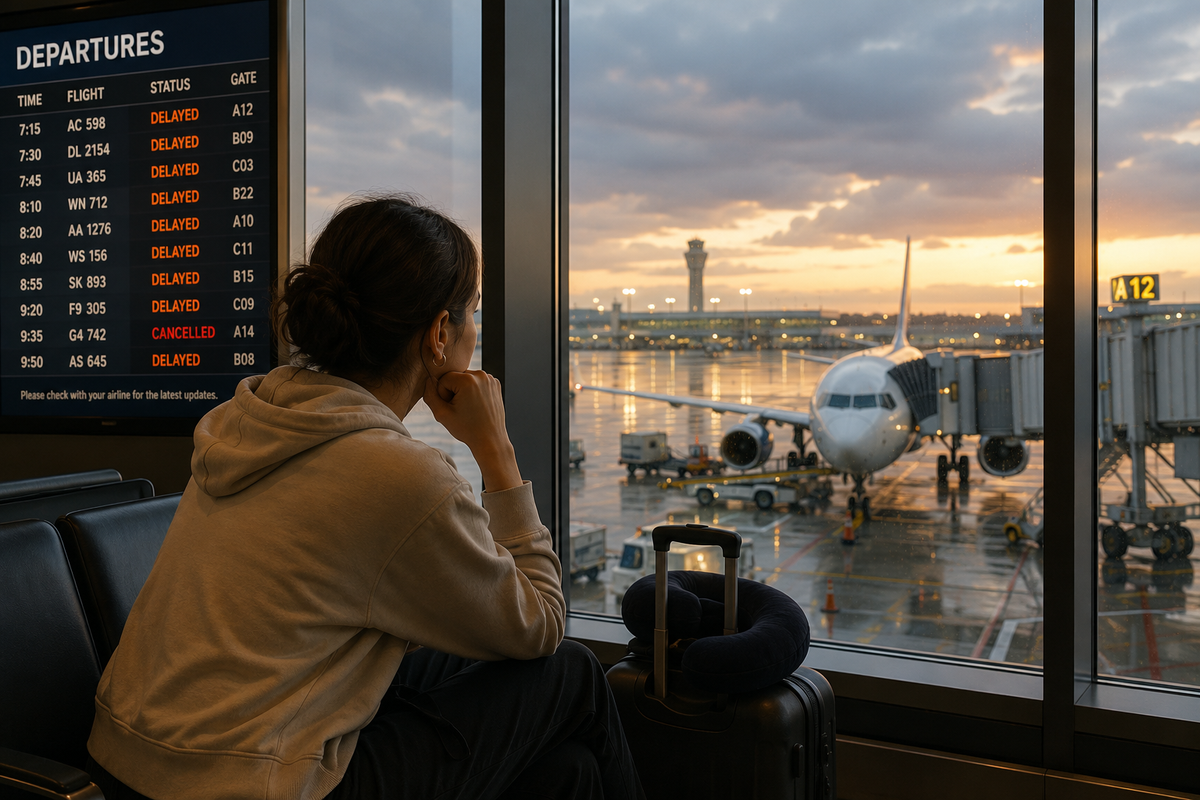
As I sit here on the flight deck, watching the clock tick closer and closer to our scheduled departure time, I can feel the tension rising. My 1 year of experience as a regional flight attendant have taught me that flight delays are an inevitable part of air travel. But what passengers don't know about these frustrating delays is just as fascinating.
Why Delays Happen
Flight delays occur when there's a mismatch between the scheduled and actual departure times, leaving passengers stuck on the ground. According to a recent study, nearly 50% of flights are delayed by at least 15 minutes. So, what causes these delays?
- Weather: Inclement weather conditions like thunderstorms, fog, or heavy snow can make takeoff and landing challenging.
- Air Traffic Control: Congested airspace, especially in peak travel seasons, can slow down flight operations.
- Maintenance Issues: Delays due to maintenance requirements are more common than you think. Equipment failures or required repairs can ground an aircraft.
The Impact on Passengers
Passengers often feel frustrated when their flights are delayed. The uncertainty about the cause and duration of the delay can be unsettling. Some passengers might even experience anxiety or stress, which can be exacerbated by the lack of clear communication from airlines.
Insider Intel: Crew Secrets to Managing Flight Delays
As a seasoned crew member, I've learned a thing or two about managing flight delays. Here are three insider tips:
- Stay calm and focused: Keep passengers informed and engaged with in-flight entertainment and amenities.
- Communicate effectively: Be transparent about the delay cause and duration to maintain trust with passengers.
- Prioritize passenger comfort: Ensure that passengers have access to food, water, and restrooms during extended delays.
The Bottom Line
Flight delays are an unfortunate reality of air travel. But by understanding the causes and impact of these delays, we can better manage our expectations and navigate them more smoothly. So next time you're facing a flight delay, take a deep breath, grab your favorite snack from the in-flight menu, and remember that we're all in this together.
FAQs
Q: What should I do if my flight is delayed?
A: If your flight is delayed, stay calm and ask airline staff for updates on the expected departure time. They'll do their best to provide you with clear information and assist with rebooking or refunds if necessary.
Q: Can airlines prevent flight delays altogether?
A: Unfortunately, no. While airlines can take steps to minimize delays, they're often beyond their control. Weather, air traffic control, and maintenance issues are just a few examples of factors that can cause delays.
Q: How long do flights typically get delayed for?
A: Flight delays vary in length, but most are relatively short-term (15-30 minutes). However, some delays can last several hours or even overnight.If you've ever stared at the departure board wondering why your flight is delayed, you're not alone. As passengers, it's easy to assume that delays are caused by poor planning or that someone simply isn't doing their job.
As a flight attendant, I've learned that the reality is far more complicated.
Behind every delayed departure is an entire team of pilots, flight attendants, dispatchers, mechanics, gate agents, ramp crews, and air traffic controllers working together to get your flight out safely. While delays are frustrating for everyone on board—including the crew—they're almost always made with safety as the top priority.
Why Flights Get Delayed
No airline wants to delay a flight. Delays disrupt schedules, create missed connections, and cost airlines thousands of dollars. But there are several reasons why a delay may be unavoidable.
Weather
Weather is one of the biggest causes of delays.
Thunderstorms, low visibility, strong winds, snow, and even lightning near the airport can temporarily stop aircraft from departing or arriving safely. Even if the weather is beautiful where you're departing, your aircraft may be flying to—or arriving from—a location experiencing severe weather.
Air Traffic Control
The skies are busier than many people realize.
Air traffic controllers carefully manage the flow of aircraft to maintain safe separation. During peak travel times or when weather reduces available airspace, aircraft may have to wait for a departure slot.
While it may seem like your airplane is simply sitting at the gate, there could be dozens of aircraft ahead of you waiting for clearance.
Aircraft Maintenance
This is one delay passengers should never complain about.
Commercial aircraft undergo constant inspections and maintenance. If a pilot or mechanic identifies something that needs attention—even something that seems minor—the aircraft may remain on the ground until it's safe to fly.
Would you rather arrive 45 minutes late or discover the issue after takeoff?
Safety always comes first.
Crew Scheduling
Airlines operate on incredibly tight schedules.
If an inbound flight arrives late, the same pilots or flight attendants may also arrive late. Federal regulations also limit how many hours flight crews can legally work, so even a small delay earlier in the day can affect later flights.
What Passengers Don't See
While passengers wait in the terminal or onboard the aircraft, a tremendous amount of coordination is happening behind the scenes.
Teams may be:
- Reviewing updated weather reports
- Coordinating with maintenance technicians
- Waiting for connecting crew members
- Loading baggage and cargo
- Refueling the aircraft
- Updating flight paperwork
- Communicating with air traffic control
- Planning alternate routes around storms
None of these tasks are visible from your seat, but every one of them plays an important role in getting your flight safely into the air.
The Crew Wants to Leave Too
One misconception I often hear is that the crew isn't concerned about delays.
Trust me—we want to leave just as much as you do.
Flight attendants and pilots have families to get home to, hotel check-ins to make, and sometimes additional flights to operate later in the day. A delay affects us just as much as it affects our passengers.
When we're waiting, we're not relaxing—we're constantly receiving updates, preparing the cabin, coordinating with the flight deck, and making sure everything is ready the moment we're cleared to depart.
How You Can Make a Delay Less Stressful
Although you can't control the delay itself, you can make the experience a little easier.
Here are a few tips:
- Keep your phone charged.
- Bring a reusable water bottle.
- Download entertainment before your trip.
- Listen for gate announcements.
- Be patient with airline employees—they're working with the same information you are.
A little kindness goes a long way, especially on a challenging travel day.
The Bottom Line
Flight delays are never convenient, but they're rarely random.
Behind every delayed departure are professionals making decisions based on safety, regulations, weather, and operational requirements. While waiting at the gate may be frustrating, remember that every extra minute spent ensuring the aircraft is safe is time well spent.
The next time your flight is delayed, take a deep breath, grab a snack, and know that an entire team is working to get you to your destination as safely and efficiently as possible.
Because at the end of the day, arriving safely will always matter more than arriving a few minutes early.
Frequently Asked Questions
Why do airlines delay flights instead of canceling them?
Airlines will often delay a flight if they expect conditions to improve or believe the issue can be resolved within a reasonable amount of time. Canceling a flight affects passengers, crews, aircraft schedules, and airport operations far more than a delay.
Are maintenance delays common?
Yes. Aircraft are inspected continuously, and even minor issues may need to be addressed before departure. Safety inspections are a normal and essential part of commercial aviation.
Can the crew make the plane leave faster?
No. Flight crews cannot bypass weather restrictions, maintenance requirements, or air traffic control instructions. Every commercial flight must meet strict safety and regulatory requirements before departure.
Should I worry if my flight is delayed for maintenance?
Not at all. In fact, maintenance delays are a sign that the airline is taking safety seriously by addressing potential issues before takeoff.
What's the biggest cause of flight delays?
Weather remains one of the leading causes of delays, followed by air traffic congestion, maintenance, and operational scheduling challenges.